 Bulkington Books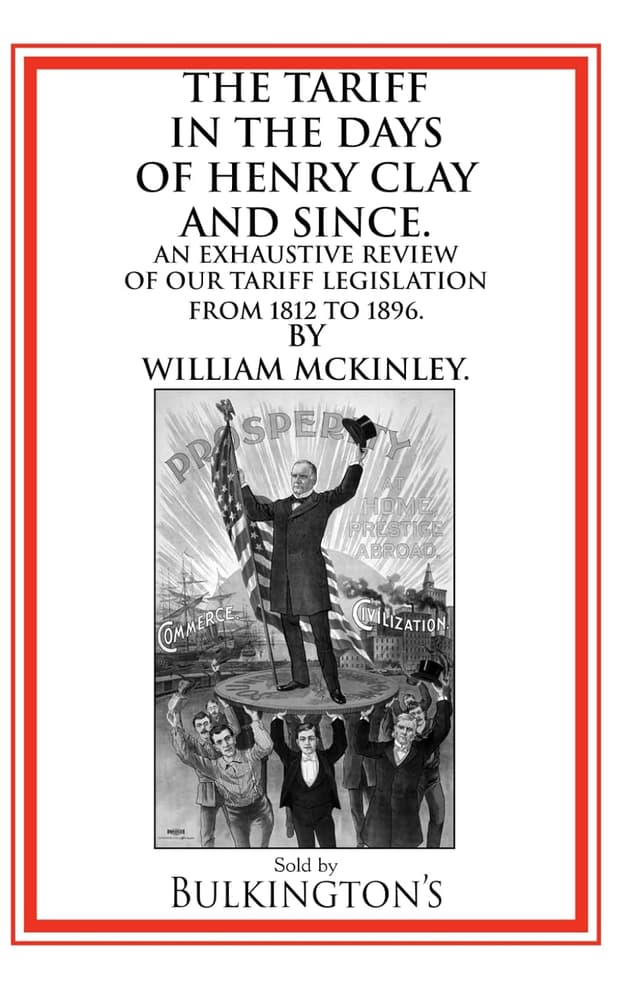
The Folio · 1896 · restored 2025
The Tariff in the Days of Henry Clay and Since
William McKinley — We have reset the whole of it in fresh type, kept the 1896 argument intact, and added a foreword that says plainly what the book is and is not.
We have reset the whole of it in fresh type, kept the 1896 argument intact, and added a foreword that says plainly what the book is and is not. You may read the man on his own terms, which is more than the newspapers of either century will offer you.
Restored from the copy scanned by Cornell University Library and hosted at the Internet Archive.
- retypeset
- new introduction
- annotations
“Cheap merchandise means cheap men, and cheap men mean a cheap country.”
"Cheap merchandise means cheap men, and cheap men mean a cheap country."
So wrote William McKinley in 1896 — not as president, but as the Republican party's reigning authority on the tariff question, the man whose name was on the tariff act of 1890 and whose career was built on the conviction that American labor deserved protection from the cheaper labor of Europe.
This is not a campaign pamphlet. It is a sustained argument, built from statistics, historical precedent, and the speeches of Henry Clay, and it deserves to be read on its own terms — especially now, when tariffs are back in the headlines and the argument is being conducted by people who have not read the original case.
Purchase links are affiliate links. We earn a small commission at no cost to you.
cite this
McKinley, William. The Tariff in the Days of Henry Clay and Since (1896). Bulkington Books, 2025.